Mylor Local History Group

20th March 2022

The Ukraine Memorial

by Terry Chapman          

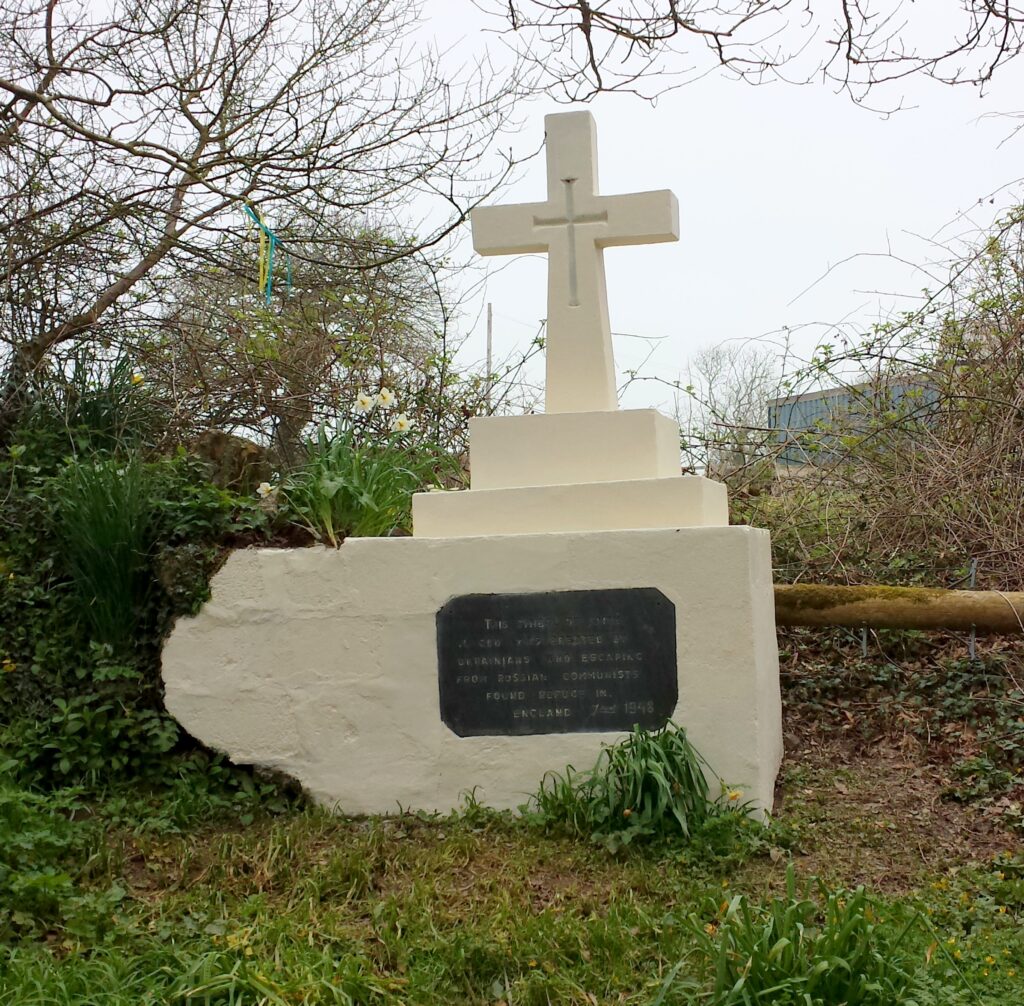
 There is a brief entry about the Ukraine Memorial Monument in The Book of Mylor, (2004/7, p.151/152), seemingly drawing on an earlier article in the Flushing Newsletter (Nov. 1984) by distinguished local historian, Joan West.  From that, and other sources in the Mylor Local History Group Archive, we learn that the camp housed over 100 mainly Ukrainian refugees.  Some ten Nissen huts included a kitchen, a mess-hall and one which they converted into a chapel.  Those who were left when it closed in 1948, built and had the local Catholic priest dedicate the Memorial as a symbol of both their faith and gratitude.
Ukraine Memorial
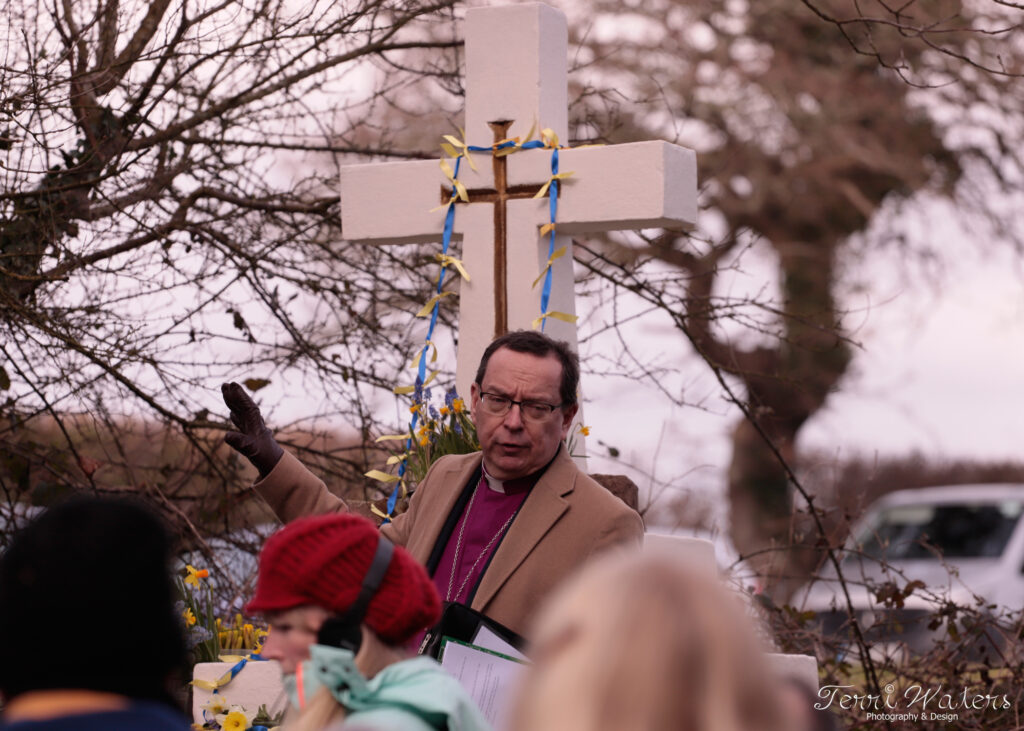
The Ukraine Memorial on the Service of the 27th February 2022. - Photograph Terri Waters
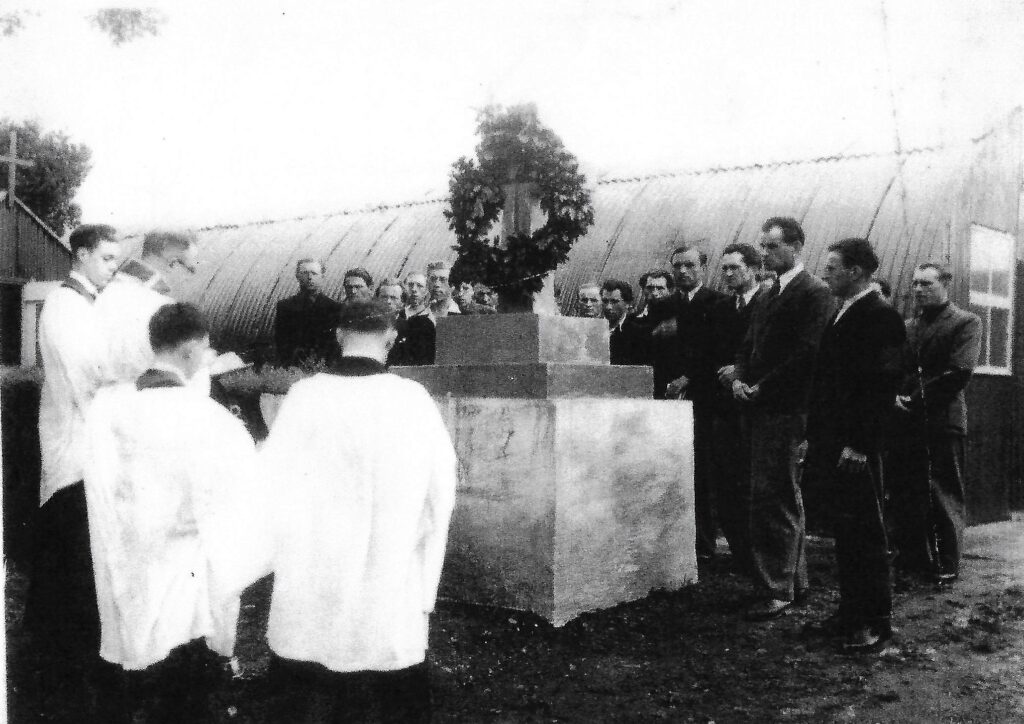
Ukraine Memorial Dedication 1948
Dedicating the Ukrainian memorial cross in June 1948 built on the site of their old Guard House. Their Church was in the Nissen Hut in the background.
The Ukraine Chapel in a Nissen Hut

The story of Dmitro Szemczuk (known locally as Jim, once he and his family had settled here) revealed that able-bodied men like him had been forced to work in German munition plants.  Conditions were apparently appalling, with danger, disease, and death all too commonplace. Liberated by the Allies at the end of the War, those fearing or not wishing to return to their homeland, by then occupied by Stalin’s troops, were offered repatriation in Canada, the US, or here in the UK including Mylor Bridge.  ‘Jim’ came here, worked on local farms, learnt the language and became one of the leaders in what was the ‘Displaced Persons’ camp.

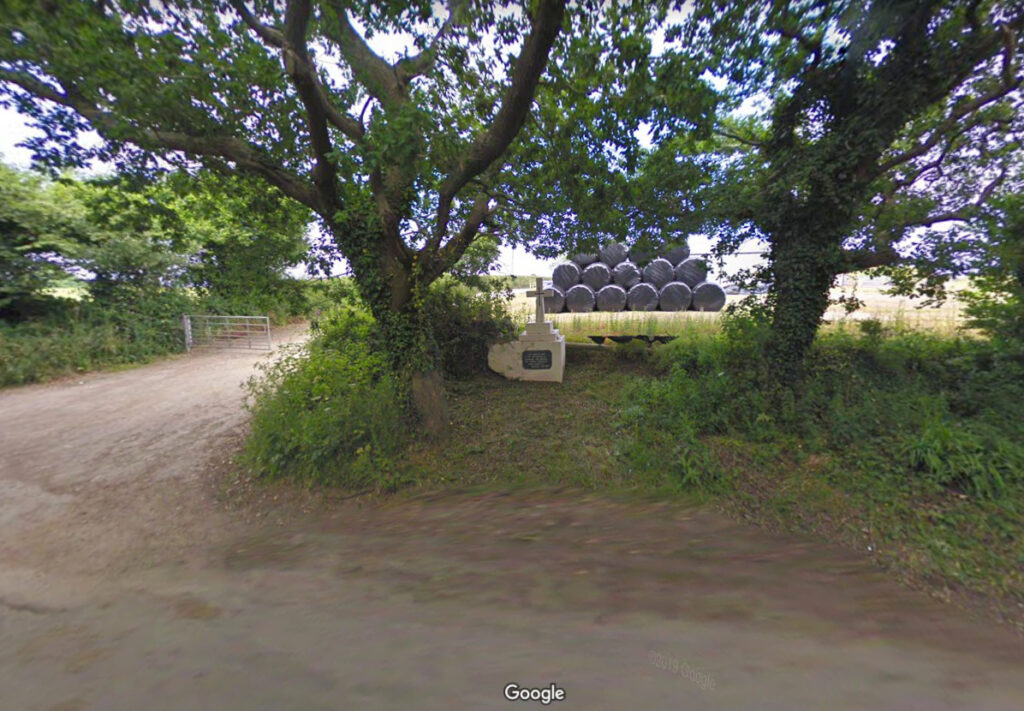
The Memorial Pictured in 2018

Dialogue on local social media following the Russian invasion of Ukraine in February 2022 told the story of Ukrainian Nicolas Muziack, or ‘Nick the Pole’ as he was affectionately, if inaccurately known.  His family were captured by the Nazis, but as his hands showed he had done manual work he was sent to a slave factory, while the rest of his family went to extermination camps.  Even when freed, he too realised that since he had ‘worked’ for the Nazis, he was likely to be shot if taken by the Russians.  He also made his way across Europe and England to Mylor.  He settled and married locally, worked in Falmouth docks, but apparently much preferred his fishing and boat building from the well-stocked old black shed that stood next to Mill Quay.  Some attending the village school in the 1950s also remember Austin ‘Pasty’ Pastalnik whose Ukrainian parents lived at the end of New Row.  When a refugee remembered as ‘Anton’, who had lived further along New Row, died he apparently left his property to the Duchy to thank the country that had saved him. 

Ukraine Memorial Service
The Service Carried out at the Memorial on the 27th February 2022 in support of Ukraine during the war with Russia - Photograph Terri Waters

From an information panel by another unimpeachable local historian, Peter Gilsom, we can see the drawn-out route taken by Jaroslaw Guudzij, all across Germany, to land at Hull on his way to Mylor camp.  From it we also learn that the site had previously been an anti-aircraft battery, and an Italian prisoner-of-war camp.  The later displaced Ukrainians were bussed out each day, some to work in local hotels and mines, but most to local farms, being from agricultural areas. As well as accommodation, there was apparently also a sports field on the other side of the road.  

Some of the camp’s by then aging residents attended the ‘Service of Thanksgiving and Remembrance’ held on the Memorial’s sixtieth anniversary during June of 2008. We have moving testimonials of their experiences, including of local kindness, together with press cuttings of the event. 

Feder Kurlak, then CEO of the Association of Ukrainians in Great Britain who attended the anniversary celebrations, has written thanking us for maintaining the Monument.  He felt ‘privileged to be a descendant of those good people’ and that, ‘the memorial holds a very special place in our hearts’. Mr Kurlak also told us that two pictures of the original dedication hang permanently in their Boardroom. The size and disposition of the haven can, incidentally, be gauged from one of those pictures, beyond the sixteen or so present in their Sunday best, together with the local priest and his attendants.
We at Mylor are custodians of this tangible commemoration of their faith, their suffering and liberation, perhaps not only obliged but proud to maintain it.  Both the Local History Group, the local Womens Institute and others have helped to maintain the Memorial.  We shall continue to maintain the Memorial  and perhaps  mark it’s Seventy Fifth Anniversary in June 2023.

Ukraine Memorial
The Memorial - Photograph from Google Earth - June 2009