exploring our history and keeping it safe
15th April 2021
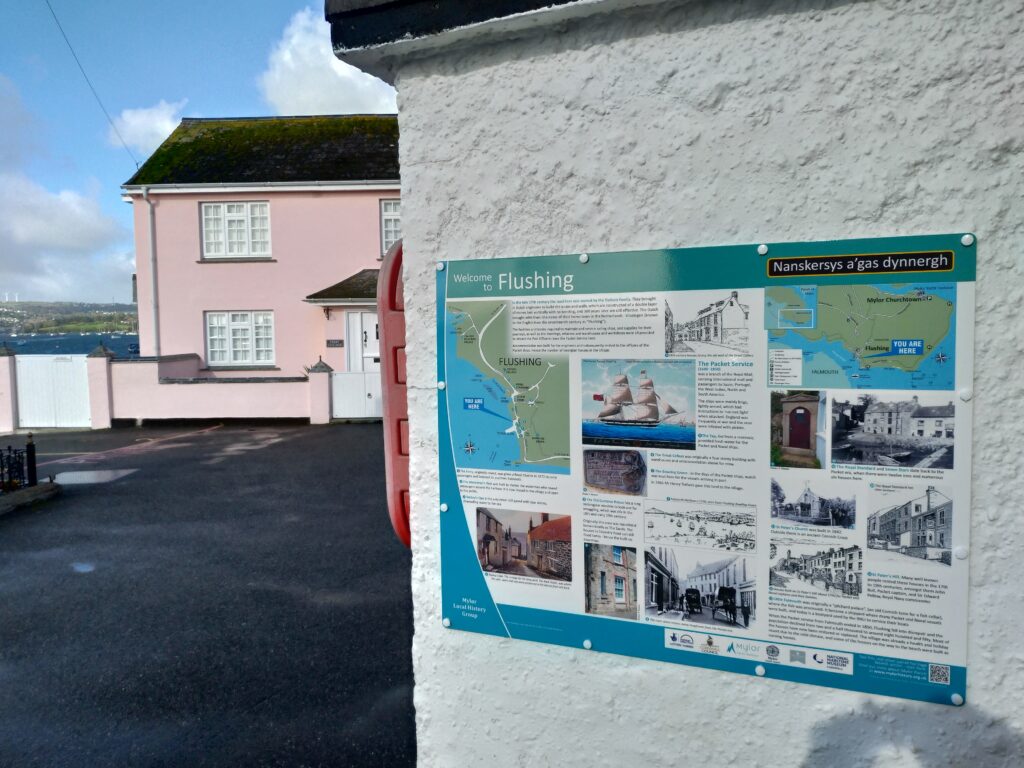
A Heritage board is located on the wall to the left of the entrance to the Quay
In the late 17th century the land here was owned by the Trefusis family. They brought in Dutch engineers to build the quays and walls, which are constructed of a double layer of stones laid vertically with no bonding, and 300 years later are still effective. The Dutch brought with them the name of their home town in the Netherlands – Vlissingen (known to the English in the 17th century as “Flushing”)
The facilities and trades required to maintain and service sailing ships, and supplies for their journeys, as well as the moorings, wharves and warehouses and workshops were all provided to attract the Post Office to base the Packet Service here.
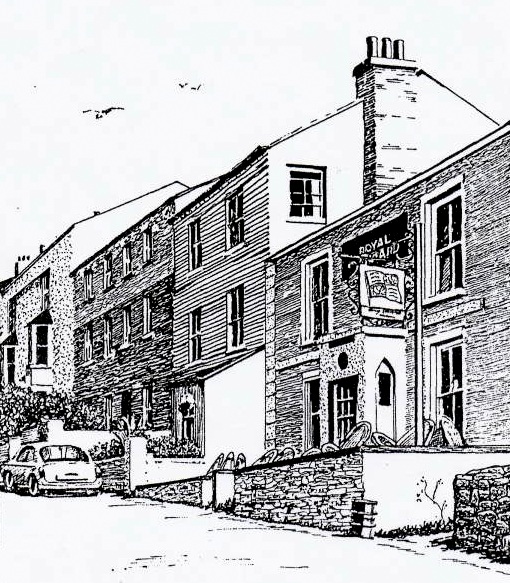
Accommodation was built for the engineers and subsequently rented to the officers of the Packet ships. Hence the number of Georgian houses in the village.
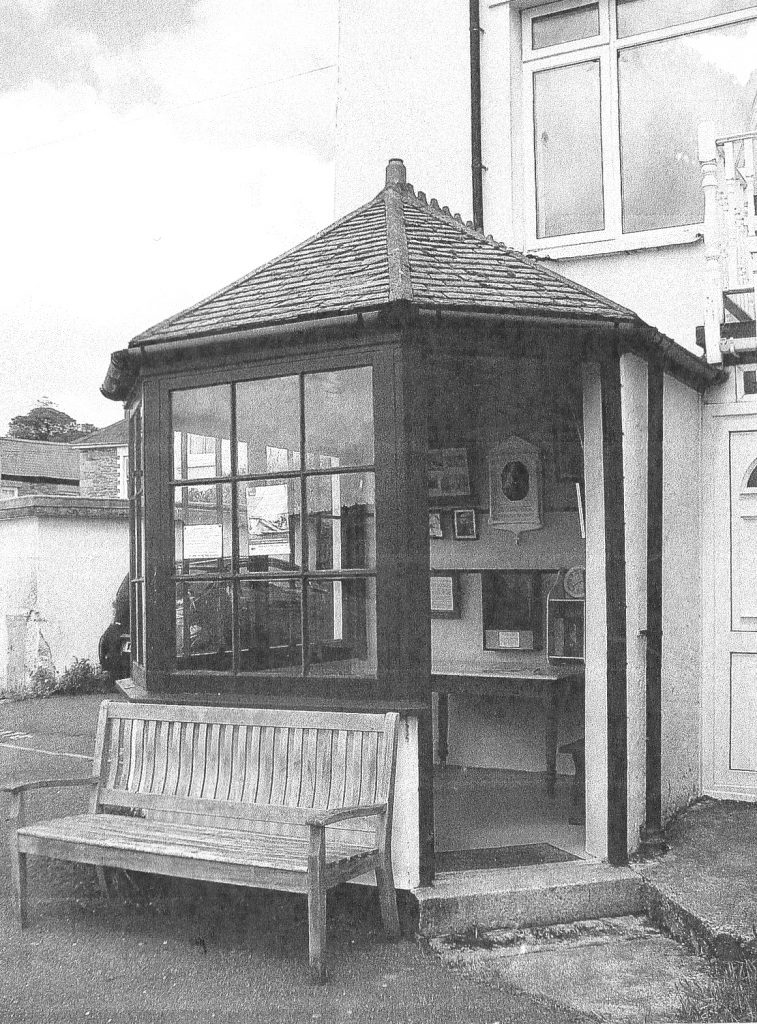
The ferry, originally rowed, was given a Royal Charter in 1672 to carry passengers and livestock to and from Falmouth. The Waterman’s Rest was built to shelter the Watermen who rowed passengers around the harbour. It is now leased to the Village and open to the public.
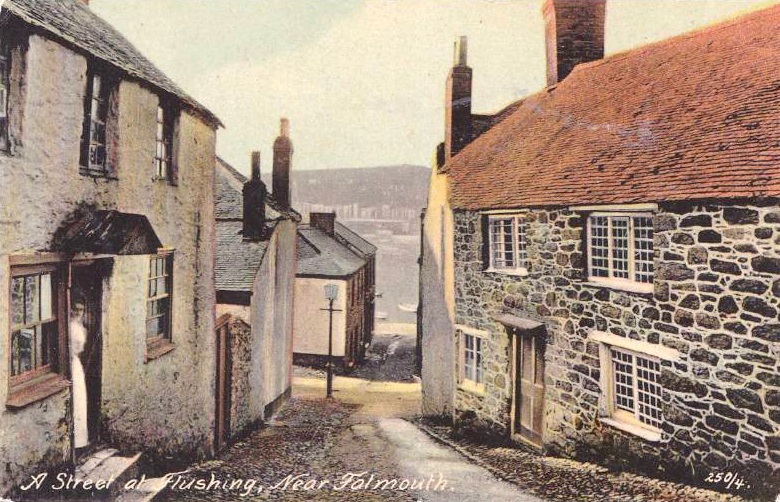
Barkey’s Ope is the only street still paved with spar stones, channelling water to the sea.
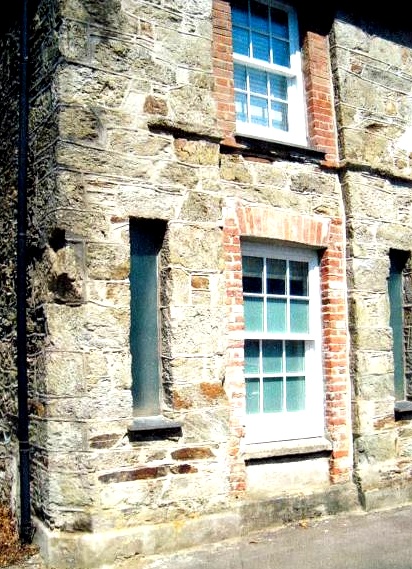
The Old Customs House has a long rectangular window to look out for smuggling, which was rife in the 18th and 19th century.
Originally this area was marshland known locally as The Sands. The houses in Coventry Road can still flood today – hence the built-up door steps.
The Packet Service (1680 -1850) was a branch of the Royal Mail, carrying international mail and passengers to Spain, Portugal, the West Indies, North and South America.
The ships were mainly brigs, lightly armed, which had instructions to ‘run not fight’ when attacked. England was frequently at war and the seas were infested with pirates.
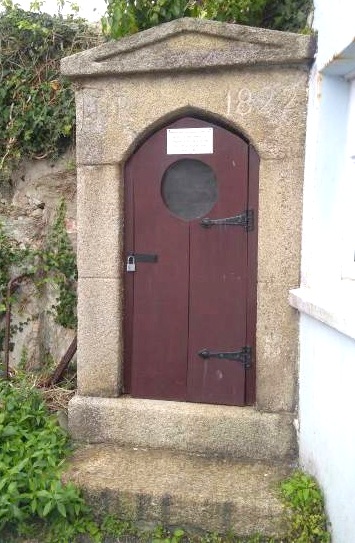
The Tap, fed from a reservoir, provided fresh water for the Packet and Naval ships.
The Great Cellars was originally a four storey building with warehouses and accommodation above for crew.
The cottage on the corner of Barkey’s Ope by the lamp post, The Bark House, was where sails, ropes and nets were preserved in the tannin from oak bark.
Watch was kept from The Bowling Green – in the days of the Packet ships – for the vessels arriving in port. In 1965 Mr Henry Trefusis gave this land to the Village. It has been transformed into an area which is the venue for many activities including an excellent children’s play area and is maintained by volunteers. The views of the harbour are wonderful.
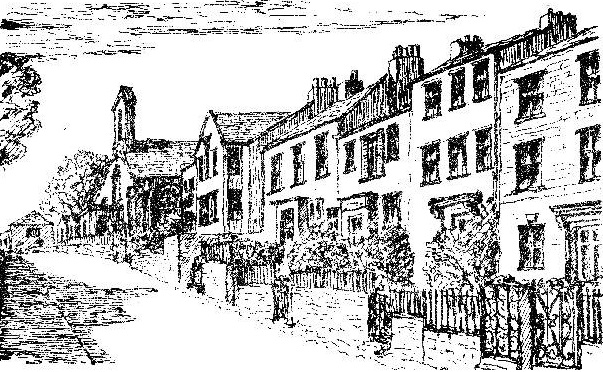
Many well known people rented properties on Peter’s Hill in the 17th to 19th centuries, amongst them John Bull, Packet captain, and Sir Edward Pellew, Royal Navy commander.
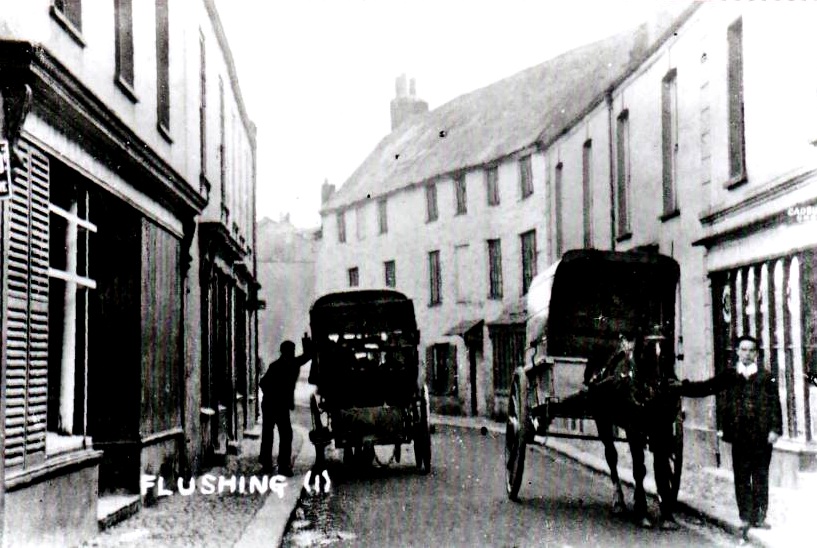
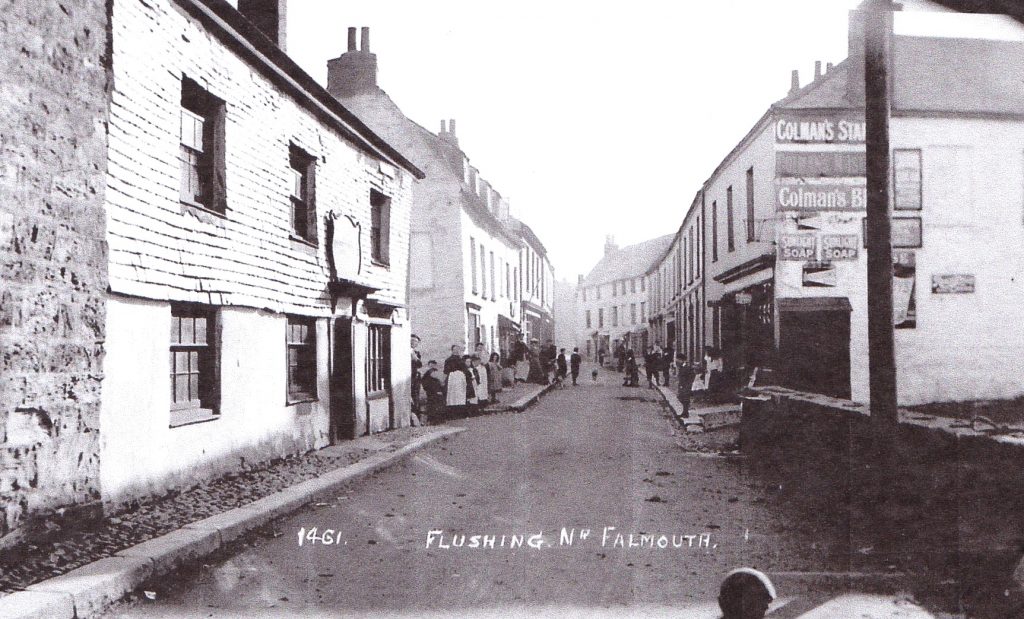
The main street retains many shopfronts from the Packet era.
Little Falmouth was originally a “pilchard palace”, (an old Cornish term for a fish cellar), where the fish were processed. It became a Shipyard where many Packet and Naval vessels were built, and today is a boatyard used by the RNLI to service their boats.
When the Packet service from Falmouth ended in 1850, Flushing fell into disrepair and the population declined from two and a half thousand to around eight hundred and fifty. Most of the houses have now been restored or replaced. The village was already a health and holiday resort due to the mild climate, and some of the houses on the way to the beach were built as nursing homes.
Sketches courtesy of the Estate of Ursula Redwood